A Timeless Renowned Jewelry Brand
incl. 19% VAT

Your Cart

Earrings

Silver Pearl & Diamond Stud Earrings

SKU:AZ7842374

Alloy: Rose Gold
Gold Purity: Platinum (PT 950)
Length/in.: 39
QTY
in Stock

$ 464.00

Diamond

Emerald 3.50-3.70mm X 2.60- 2.80mm (0.18-0.22)

SKU:AZ7842374

Alloy: Rose Gold
Gold Purity: Platinum (PT 950)
Length/in.: 39
QTY
in Stock

$ 464.00

Necklaces

Emerald Necklaces

SKU:AZ7842374

Alloy: Rose Gold
Gold Purity: Platinum (PT 950)
Length/in.: 39
QTY
in Stock

$ 17,370.00

Diamond

Emerald 3.50-3.70mm X 2.60- 2.80mm (0.18-0.22)

SKU:AZ7842374

Alloy: Rose Gold
Gold Purity: Platinum (PT 950)
Length/in.: 39
QTY
in Stock

$ 464.00

Shipping

Calculated at Checkout

Subtotal

$20,500.00

Daimond

Choose Your Assortment

2,000 +

Ready Assortments

500,000 +

Ready to ship Carats

8,500 +

Satisfied Customers Worldwide

67 +

Countries for Doorstep Delivery

100% Certified Loose Diamond Parcels

24/7 Customer Support

Fast Worldwide Shipping

Secure Online Payment

What Distinguishes G.Eager Diamonds

At G.Eager Diamonds, we pride ourselves on offering certified, ethically sourced diamonds of exceptional brilliance and character. Each gem is carefully selected from Africa’s natural reserves, ensuring authenticity and excellence for our discerning clientele across the globe.

Our Signature Offerings

  • Bespoke Diamond Portfolios
    We curate tailored diamond investment portfolios for business clients seeking long-term value and exclusivity. Schedule a consultation to explore your options
  • Ethical Sourcing Commitment
    Every diamond we offer is conflict-free and responsibly sourced, reflecting our unwavering dedication to sustainable luxury.
  • Innovative Design Excellence
    From timeless classics to contemporary masterpieces, our design ethos embraces versatility and personal expression. Empower your vision manufacture your own luxury
  • Lifetime Diamond Guarantee
    Our diamonds are backed by a lifetime warranty, providing enduring confidence and peace of mind with every purchase.
  • Precision Selection Tools
    Clients can refine their choices using advanced selection features that highlight brilliance, clarity, and cut—ensuring each diamond meets their exacting standards.
  • Exclusive & Limited Collections
    Discover rare and limited-edition pieces that exemplify uniqueness and elevate any collection with distinction.

Know More About Diamonds and it 4Cs

Diamond Carat

Carat refers to the weight of a diamond, not its size. As carat weight increases, so does the price—often exponentially.

Diamond Color

When evaluating diamond color, experts actually assess how colorless a diamond is. The less color present, the higher the quality and value.

Diamond Clarity

Clarity measures a diamond’s internal (inclusions) and external (blemishes) characteristics.

Diamond Cut

Cut is the only diamond characteristic shaped by human craftsmanship. It determines how well a diamond reflects light—affecting brilliance, fire, and sparkle.

Discover Your Ideal
Diamond: FAQs

Gain clear, concise insights into the essentials of diamond selection—from the 4Cs to our commitment to ethical sourcing. Empower your decision-making with trusted guidance and expert clarity.

Diamond Carat

Carat refers to the weight of a diamond, not its size. As carat weight increases, so does the price—often exponentially. For example, a 2-carat diamond of the same quality will cost significantly more than a 1-carat diamond. Don’t confuse “carat” with “karat,” which measures gold purity.

  • 1 carat = 100 points (e.g., 0.75 carat = 75 points)
  • 5 carats = 1 gram
  • 1 carat = 0.200 grams

What Carat Weight Should I Choose?

Your ideal carat weight depends on your budget and preferences. While larger diamonds are more noticeable, beauty isn’t just about size. Cut, color, and clarity are equally important. You might opt for a smaller, higher-quality diamond or a larger one with lower grades—both can be stunning depending on your priorities.

Once you’ve chosen your desired cut, color, and clarity, it’s easier to find a carat weight that fits your budget. Visual guides can help you understand how different carat sizes appear when worn.

Expert Tips from G.Eager Jewels

  • Always check the millimeter (mm) measurements of a diamond—this reflects how large it will look when set in jewelry.
  • Diamond prices spike at full and half-carat marks (e.g., 0.50, 1.00, 1.50). Choosing a diamond just below these weights can offer better value with minimal visual difference.
  • Finger size affects perception: a 1.50-carat diamond looks larger on a size 8 finger than on a size 12.
Diamond Color

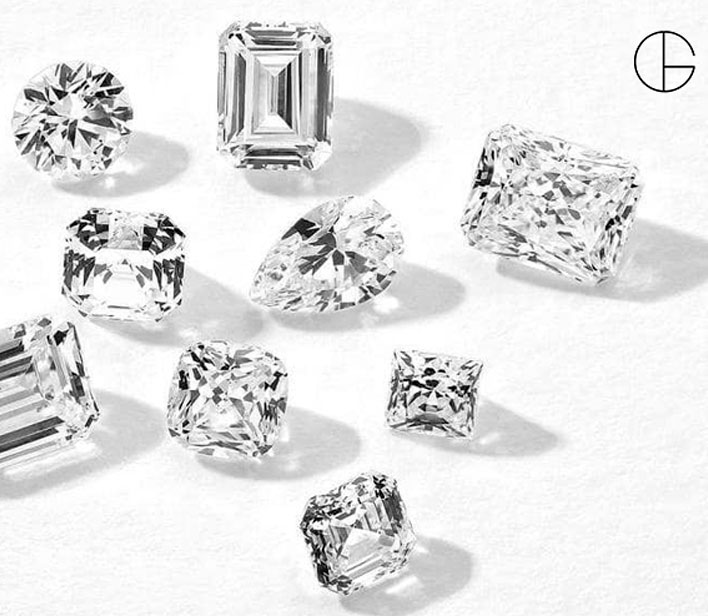
When evaluating diamond color, experts actually assess how colorless a diamond is. The less color present, the higher the quality and value. While most diamonds appear white, many contain subtle tints that can affect their appearance and price. These color differences are often invisible to the untrained eye but play a crucial role in grading.

Diamonds are graded on a scale that measures the absence of color—the clearer the diamond, the more valuable it is.

GIA Color Grading Scale

The Gemological Institute of America (GIA) developed a standardized scale ranging from D to Z:

  • D: Completely colorless and extremely rare—highest value.
  • E–F: Nearly colorless, with minute traces of color detectable only by experts.
  • G–J: Near colorless, offering excellent value with minimal visible tint.
  • K–Z: Noticeable color, typically yellow or brownish hues.

Each letter represents a range of tone and saturation, helping buyers make informed choices.

Which color to choose?

  • Colorless vs. Near Colorless: The visual difference is minimal, but the price gap can be substantial.
  • D–F Range: Ideal for those seeking perfection and purity.
  • G–I Range: Offers great value while maintaining a colorless appearance.
  • J–L Range: Suitable for larger diamonds or higher clarity within budget.
  • Shape Considerations: Fancy shapes like marquise, radiant, pear, and princess can concentrate color at their tips—opt for higher color grades in these cases.

Fluorescence

Fluorescence refers to a diamond’s reaction to ultraviolet (UV) light, often seen in environments like nightclubs. While usually invisible under normal lighting, strong fluorescence can give diamonds a milky or oily appearance, reducing their value.

However, fluorescence can enhance the appearance of yellow-tinted diamonds (J–M range), making them look whiter. In such cases, diamonds with faint to medium fluorescence may offer better visual appeal and value.

Tips from g.Eager jewels experts

  • Metal Matters: Yellow gold can reflect color into the diamond—consider I or lower grades. For white gold or platinum, F–H grades are ideal.
  • Grade Differences: The jump from G to H or I to J is subtle to the eye but significant in cost. More noticeable differences occur between D and G or G and J.
  • Size Sensitivity: Larger diamonds (1.50ct+) show color more clearly—choose higher grades accordingly.
  • Fluorescence Advantage: In J–M color ranges, fluorescence can make diamonds appear whiter.
Diamond Clarity

Clarity measures a diamond’s internal (inclusions) and external (blemishes) characteristics. These natural features affect how light passes through the diamond, influencing its brilliance.

Most imperfections are microscopic and don’t impact beauty. However, larger or darker inclusions—like black “Natts”—can be visible and reduce value.

GIA Clarity Grades

Grade
Description
FL

Flawless – No inclusions or blemishes under 10x magnification. Extremely rare.

IF

Internally Flawless – No inclusions, only minor surface blemishes. Very rare.

VVS1/VVS2

Very Very Slightly Included – Inclusions are extremely difficult to detect.

VS1/VS2

Very Slightly Included – Minor inclusions, invisible to the naked eye.

SI1/SI2

RVery Slightly Included – Minor inclusions, invisible to the naked eye.

I1/I2/I3

Included – Obvious flaws that can affect brilliance and transparency.

What clarity grade to choose?

  • VVS1/VVS2: Ideal for those seeking near-perfect diamonds.
  • VS1/VS2: Great value—clean to the naked eye.
  • SI1/SI2: Budget-friendly options for larger size or better color.
  • Eye-Clean Diamonds: SI1 and VS2 often appear flawless without magnification.

Keep in mind: As diamond size increases, inclusions become more noticeable. A 2.00ct SI2 will show flaws more easily than a 0.30ct SI2.

Tips from g.Eager jewels experts

  • Under 1ct: Clarity is less critical—price differences are smaller.
  • 1–2ct Range: SI1 or better ensures minimal visible inclusions.
  • Over 2ct: VS2 or higher is recommended to avoid visible flaws.
  • Shape Sensitivity: Asscher and Emerald cuts reveal inclusions more easily—choose SI1 or better.
Diamond Cut

Cut is the only diamond characteristic shaped by human craftsmanship. It determines how well a diamond reflects light—affecting brilliance, fire, and sparkle. A well-cut diamond appears vibrant and lively, while a poorly cut one may look dull.

Cut includes proportions, polish, and symmetry. For round diamonds, all three are graded. For fancy shapes, only polish and symmetry are assessed.

Cut grades

Grade
Description
Ideal/Excellent

Reflects nearly all light—maximum brilliance and beauty.

Very Good

Reflects most light—great value.

Good

Adequate light reflection—budget-friendly.

Fair

Less brilliance—still a quality diamond.

Poor

RVery Slightly Included – Minor inclusions, invisible to the naked eye.

Which Diamond Cut Grade Should You Choose?

The cut grade is the most critical factor in determining a diamond’s overall beauty. Even a diamond with top-tier clarity and color can appear lifeless if it’s poorly cut. On the other hand, a well-cut diamond—even with slightly lower color (G-H) or clarity (SI1-SI2)—can still look stunning due to its ability to reflect light and create brilliance.

Recommended Cut Grades

  • For Maximum Sparkle: Choose a round diamond with a cut grade of Very Good or Excellent, and ensure the Polish and Symmetry grades are at least Good, ideally Very Good.
  • For Fancy Shapes: Avoid diamonds with Polish or Symmetry grades below Good.
  • For Top Quality: Look for a Triple Excellent diamond—graded Excellent in Cut, Polish, and Symmetry.
  • For Budget Buyers: If size is your priority, a diamond with a Good or Fair cut may be acceptable. It won’t sparkle as much, but you’ll get a larger stone for the same price.

Common Pitfalls to Avoid

  • Uncertified Diamonds: Be cautious—uncertified diamonds can be misleading in quality.
  • Deep Cuts: Avoid diamonds that are cut too deep. These hide carat weight in depth rather than width, making them appear smaller than they actually are. For example, a 1.00 carat diamond may look like a 0.90 carat if it’s too deep.
  • Trusted Certification: Always buy diamonds certified by reputable labs such as GIA, IGI, HRD.

Expert Tips from G.EAGER JEWELS

  • Prioritize Cut: Since cut affects beauty the most, balance your budget across Carat, Color, and Clarity to afford a diamond with an Excellent or Very Good cut.
  • Avoid Poor Cuts: Even if cheaper, a poorly cut diamond is not recommended. If budget is tight, opt for slightly lower color or clarity—but maintain a cut grade of Good or better.

Choose Your Assortment

2,000 +

Ready Assortments

500,000 +

Ready to ship Carats

8,500 +

Satisfied Customers Worldwide

67 +

Countries for Doorstep Delivery

200% Certified Loose Diamond Parcels

24/7 Customer Support

Fast Worldwide Shipping

Secure Online Payment

What Distinguishes
G.Eager Diamonds

At G.Eager Diamonds, we pride ourselves on offering certified, ethically sourced diamonds of exceptional brilliance and character. Each gem is carefully selected from Africa’s natural reserves, ensuring authenticity and excellence for our discerning clientele across the globe.

Our Signature Offerings

  • Bespoke Diamond Portfolios
    We curate tailored diamond investment portfolios for business clients seeking long-term value and exclusivity. Schedule a consultation to explore your options
  • Ethical Sourcing Commitment
    Every diamond we offer is conflict-free and responsibly sourced, reflecting our unwavering dedication to sustainable luxury.
  • Innovative Design Excellence
    From timeless classics to contemporary masterpieces, our design ethos embraces versatility and personal expression. Empower your vision manufacture your own luxury
  • Lifetime Diamond Guarantee
    Our diamonds are backed by a lifetime warranty, providing enduring confidence and peace of mind with every purchase.
  • Precision Selection Tools
    Clients can refine their choices using advanced selection features that highlight brilliance, clarity, and cut—ensuring each diamond meets their exacting standards.
  • Exclusive & Limited Collections
    Discover rare and limited-edition pieces that exemplify uniqueness and elevate any collection with distinction.

Know More About Diamonds and it 4Cs

Diamond Carat

Carat refers to the weight of a diamond, not its size. As carat weight increases, so does the price—often exponentially.

Diamond Color

When evaluating diamond color, experts actually assess how colorless a diamond is. The less color present, the higher the quality and value.

Diamond Clarity

Clarity measures a diamond’s internal (inclusions) and external (blemishes) characteristics.

Diamond Cut

Cut is the only diamond characteristic shaped by human craftsmanship. It determines how well a diamond reflects light—affecting brilliance, fire, and sparkle.

Discover Your Ideal
Diamond: FAQs

Gain clear, concise insights into the essentials of diamond selection—from the 4Cs to our commitment to ethical sourcing. Empower your decision-making with trusted guidance and expert clarity.

Diamond Carat

Carat refers to the weight of a diamond, not its size. As carat weight increases, so does the price—often exponentially. For example, a 2-carat diamond of the same quality will cost significantly more than a 1-carat diamond. Don’t confuse “carat” with “karat,” which measures gold purity.

  • 1 carat = 100 points (e.g., 0.75 carat = 75 points)
  • 5 carats = 1 gram
  • 1 carat = 0.200 grams

What Carat Weight Should I Choose?

Your ideal carat weight depends on your budget and preferences. While larger diamonds are more noticeable, beauty isn’t just about size. Cut, color, and clarity are equally important. You might opt for a smaller, higher-quality diamond or a larger one with lower grades—both can be stunning depending on your priorities.

Once you’ve chosen your desired cut, color, and clarity, it’s easier to find a carat weight that fits your budget. Visual guides can help you understand how different carat sizes appear when worn.

Expert Tips from G.Eager Jewels

  • Always check the millimeter (mm) measurements of a diamond—this reflects how large it will look when set in jewelry.
  • Diamond prices spike at full and half-carat marks (e.g., 0.50, 1.00, 1.50). Choosing a diamond just below these weights can offer better value with minimal visual difference.
  • Finger size affects perception: a 1.50-carat diamond looks larger on a size 8 finger than on a size 12.
Diamond Color

When evaluating diamond color, experts actually assess how colorless a diamond is. The less color present, the higher the quality and value. While most diamonds appear white, many contain subtle tints that can affect their appearance and price. These color differences are often invisible to the untrained eye but play a crucial role in grading.

Diamonds are graded on a scale that measures the absence of color—the clearer the diamond, the more valuable it is.

GIA Color Grading Scale

The Gemological Institute of America (GIA) developed a standardized scale ranging from D to Z:

  • D: Completely colorless and extremely rare—highest value.
  • E–F: Nearly colorless, with minute traces of color detectable only by experts.
  • G–J: Near colorless, offering excellent value with minimal visible tint.
  • K–Z: Noticeable color, typically yellow or brownish hues.

Each letter represents a range of tone and saturation, helping buyers make informed choices.

Which color to choose?

  • Colorless vs. Near Colorless: The visual difference is minimal, but the price gap can be substantial.
  • D–F Range: Ideal for those seeking perfection and purity.
  • G–I Range: Offers great value while maintaining a colorless appearance.
  • J–L Range: Suitable for larger diamonds or higher clarity within budget.
  • Shape Considerations: Fancy shapes like marquise, radiant, pear, and princess can concentrate color at their tips—opt for higher color grades in these cases.

Fluorescence

Fluorescence refers to a diamond’s reaction to ultraviolet (UV) light, often seen in environments like nightclubs. While usually invisible under normal lighting, strong fluorescence can give diamonds a milky or oily appearance, reducing their value.

However, fluorescence can enhance the appearance of yellow-tinted diamonds (J–M range), making them look whiter. In such cases, diamonds with faint to medium fluorescence may offer better visual appeal and value.

Tips from g.Eager jewels experts

  • Metal Matters: Yellow gold can reflect color into the diamond—consider I or lower grades. For white gold or platinum, F–H grades are ideal.
  • Grade Differences: The jump from G to H or I to J is subtle to the eye but significant in cost. More noticeable differences occur between D and G or G and J.
  • Size Sensitivity: Larger diamonds (1.50ct+) show color more clearly—choose higher grades accordingly.
  • Fluorescence Advantage: In J–M color ranges, fluorescence can make diamonds appear whiter.
Diamond Clarity

Clarity measures a diamond’s internal (inclusions) and external (blemishes) characteristics. These natural features affect how light passes through the diamond, influencing its brilliance.

Most imperfections are microscopic and don’t impact beauty. However, larger or darker inclusions—like black “Natts”—can be visible and reduce value.

GIA Clarity Grades

Grade
Description
FL

Flawless – No inclusions or blemishes under 10x magnification. Extremely rare.

IF

Internally Flawless – No inclusions, only minor surface blemishes. Very rare.

VVS1/VVS2

Very Very Slightly Included – Inclusions are extremely difficult to detect.

VS1/VS2

Very Slightly Included – Minor inclusions, invisible to the naked eye.

SI1/SI2

RVery Slightly Included – Minor inclusions, invisible to the naked eye.

I1/I2/I3

Included – Obvious flaws that can affect brilliance and transparency.

What clarity grade to choose?

  • VVS1/VVS2: Ideal for those seeking near-perfect diamonds.
  • VS1/VS2: Great value—clean to the naked eye.
  • SI1/SI2: Budget-friendly options for larger size or better color.
  • Eye-Clean Diamonds: SI1 and VS2 often appear flawless without magnification.

Keep in mind: As diamond size increases, inclusions become more noticeable. A 2.00ct SI2 will show flaws more easily than a 0.30ct SI2.

Tips from g.Eager jewels experts

  • Under 1ct: Clarity is less critical—price differences are smaller.
  • 1–2ct Range: SI1 or better ensures minimal visible inclusions.
  • Over 2ct: VS2 or higher is recommended to avoid visible flaws.
  • Shape Sensitivity: Asscher and Emerald cuts reveal inclusions more easily—choose SI1 or better.
Diamond Cut

Cut is the only diamond characteristic shaped by human craftsmanship. It determines how well a diamond reflects light—affecting brilliance, fire, and sparkle. A well-cut diamond appears vibrant and lively, while a poorly cut one may look dull.

Cut includes proportions, polish, and symmetry. For round diamonds, all three are graded. For fancy shapes, only polish and symmetry are assessed.

Cut grades

Grade
Description
Ideal/Excellent

Reflects nearly all light—maximum brilliance and beauty.

Very Good

Reflects most light—great value.

Good

Adequate light reflection—budget-friendly.

Fair

Less brilliance—still a quality diamond.

Poor

RVery Slightly Included – Minor inclusions, invisible to the naked eye.

Which Diamond Cut Grade Should You Choose?

The cut grade is the most critical factor in determining a diamond’s overall beauty. Even a diamond with top-tier clarity and color can appear lifeless if it’s poorly cut. On the other hand, a well-cut diamond—even with slightly lower color (G-H) or clarity (SI1-SI2)—can still look stunning due to its ability to reflect light and create brilliance.

Recommended Cut Grades

  • For Maximum Sparkle: Choose a round diamond with a cut grade of Very Good or Excellent, and ensure the Polish and Symmetry grades are at least Good, ideally Very Good.
  • For Fancy Shapes: Avoid diamonds with Polish or Symmetry grades below Good.
  • For Top Quality: Look for a Triple Excellent diamond—graded Excellent in Cut, Polish, and Symmetry.
  • For Budget Buyers: If size is your priority, a diamond with a Good or Fair cut may be acceptable. It won’t sparkle as much, but you’ll get a larger stone for the same price.

Common Pitfalls to Avoid

  • Uncertified Diamonds: Be cautious—uncertified diamonds can be misleading in quality.
  • Deep Cuts: Avoid diamonds that are cut too deep. These hide carat weight in depth rather than width, making them appear smaller than they actually are. For example, a 1.00 carat diamond may look like a 0.90 carat if it’s too deep.
  • Trusted Certification: Always buy diamonds certified by reputable labs such as GIA, IGI, HRD.

Expert Tips from G.EAGER JEWELS

  • Prioritize Cut: Since cut affects beauty the most, balance your budget across Carat, Color, and Clarity to afford a diamond with an Excellent or Very Good cut.
  • Avoid Poor Cuts: Even if cheaper, a poorly cut diamond is not recommended. If budget is tight, opt for slightly lower color or clarity—but maintain a cut grade of Good or better.